
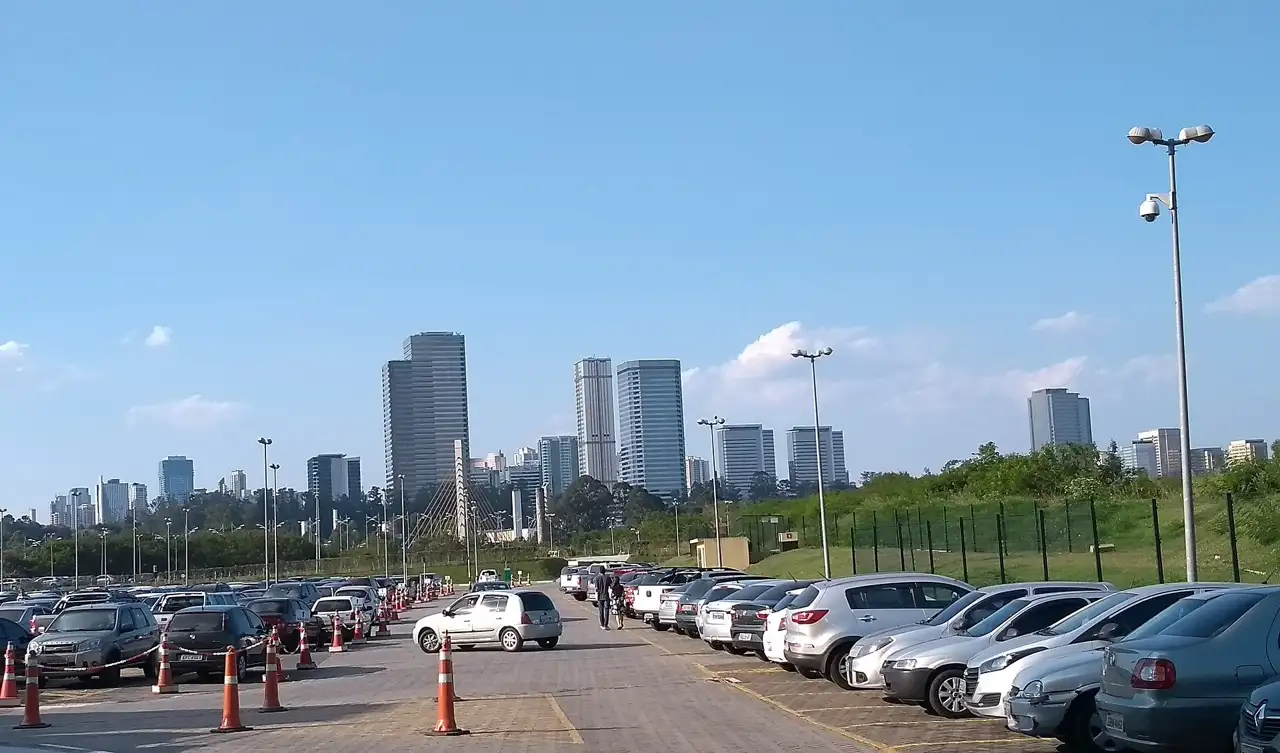

In Alphaville, retail was designed from the outset to remain outside the residential communities. The communities are predominantly residential, while shops, restaurants and services are concentrated in the commercial and business areas. This layout, typical of a planned neighborhood, shapes the shopping routine of those who live in the area.
A neighborhood planned around the business center
Alphaville originated as an industrial and business center, planned from 1973 onward on land in Barueri and Santana de Parnaíba. With the arrival of companies and, later, residents, shops, restaurants, banks and services emerged around the business core. Exame magazine cites the Centro Comercial Alphaville as one of the areas that attracted major national and multinational companies to the neighborhood.
In practice, residents find much of what they need just minutes from home, though almost always by car, since the distances between the residential communities and the commercial areas are not usually covered on foot.
Shopping mall
Iguatemi Alphaville is the neighborhood's best-known shopping center, cited by Exame among the area's landmarks. Shopping malls bring together stores, a movie theater, dining and services in one place, with parking, which is convenient for residents of gated communities who shop by car. Opening hours, stores and services should be checked on the mall's official website.
Retail and service corridors
Beyond the mall, retail is spread along the alamedas (avenues) of the Alphaville business center and the commercial areas of Tamboré. Alameda Rio Negro, the neighborhood's main link to the Castello Branco, and nearby streets concentrate the flow of people who work and live in the area. These areas are home to supermarkets, pharmacies, banks, gyms, bakeries, restaurants and service providers.
Mixed-use buildings, with shops on the ground floor and offices or apartments on the upper floors, have also expanded the range of services close to apartment residents.
Dining
The dining scene reflects the profile of a business and residential neighborhood. At lunchtime, activity is concentrated near the offices; in the evenings and on weekends, residents seek out restaurants, cafés and bars in the commercial areas and at the mall. The offering includes a variety of cuisines and well-known chains from the capital, as well as local establishments.
Because restaurants open and close frequently, this magazine does not publish lists of recommendations. To choose, consult the establishments' official websites and profiles and check opening hours and reservations.
Tips for your shopping routine
- Map out the supermarkets and pharmacies closest to your community before moving.
- Check whether delivery services reach your community and what the gatehouse rules are for couriers.
- At peak hours, the avenues leading to the business center are busier; try to shop outside those times.
- Combine shopping with trips you already make, such as school runs or the commute, to reduce travel.
Retail and property value
Proximity to shops and services is one of the factors families weigh most when choosing a property. In Alphaville, communities and buildings closer to the commercial areas offer everyday convenience, while more secluded communities tend to offer greater tranquility. Weighing this balance against the family's routine helps in choosing the right address within the area.
More in Living in Alphaville
Sources consulted (5)
- Exame - Como é morar em Alphaville (Jun. 2024) (exame.com)
- Carolina Pescatori - Alphaville and the Planning of São Paulo's Decentralization (Anais Enanpur) (anais.anpur.org.br)
- ViaOeste - New permanent access at the Alphaville Interchange (Apr. 2026) (rodovias.motiva.com.br)
- IBGE Data for Barueri (Census 2022) (cepsbrasil.com.br)
- IBGE Data for Santana de Parnaíba (Census 2022) (cepsbrasil.com.br)
Information verified on 30/10/2026. Found something outdated? Let our team know.